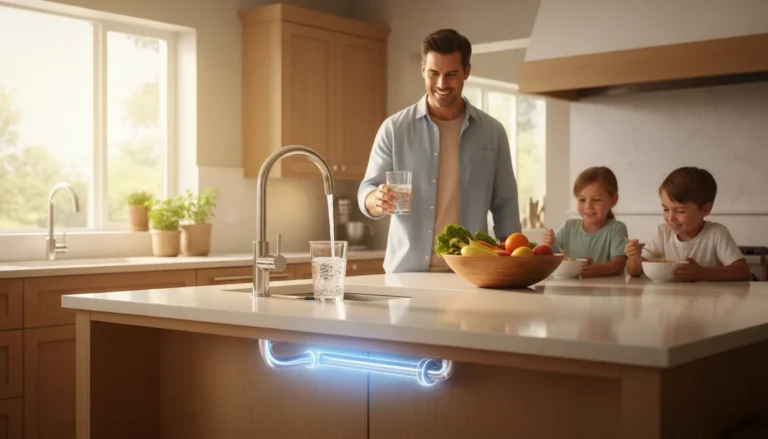
We invest in water filters and trust municipal treatment plants to deliver safe water. Yet a critical part of the journey is often overlooked: the final meters of plumbing inside our buildings. From homes to hospitals and schools, the final pipe material still matters. Stainless steel water pipes can help reduce corrosion, leaching, scale buildup and long-term contamination risks inside the wall.
The Unseen Risks in Conventional Pipes
Water quality can degrade after it enters a building’s internal plumbing system. Traditional pipe materials, over time, may contribute to corrosion, leaching, biofilm formation, scale buildup or external contamination risks under certain conditions.
For more background on how plumbing corrosion can affect drinking water, see the EPA guidance on lead in drinking water.
Corrosion and Leaching Risks
- Metallic Leaching & “Blue Water”: Copper pipes, while historically popular, can corrode in certain water conditions. This can lead to copper leaching into the water, potentially exceeding health guidelines, and cause “blue water” staining on fixtures—a visible sign of corrosion.
- The Plastic Paradox: Many plastic pipes (like some PVC or PEX) may contain chemical stabilizers or plasticizers. Over time, especially with hot water, these compounds can leach into the water supply. Concerns about volatile organic compounds (VOCs) and endocrine disruptors have brought increased scrutiny to long-term plastic-water contact.
Biofilm, Scale and Contamination Risks
- Biofilm & Scale Buildup: The interior surfaces of pipes can become breeding grounds for biofilm—a layer of bacteria. Pitting corrosion in metals or rough joints in any material provide niches for these microbes to thrive, potentially harboring pathogens like Legionella. Additionally, scale (mineral buildup) reduces water flow and can trap contaminants. CDC guidance on Legionella in potable water systems
- Permeability & External Contamination: Some non-metallic pipes have a degree of permeability, raising theoretical concerns about external soil contaminants or odors entering the water supply under certain pressure conditions.
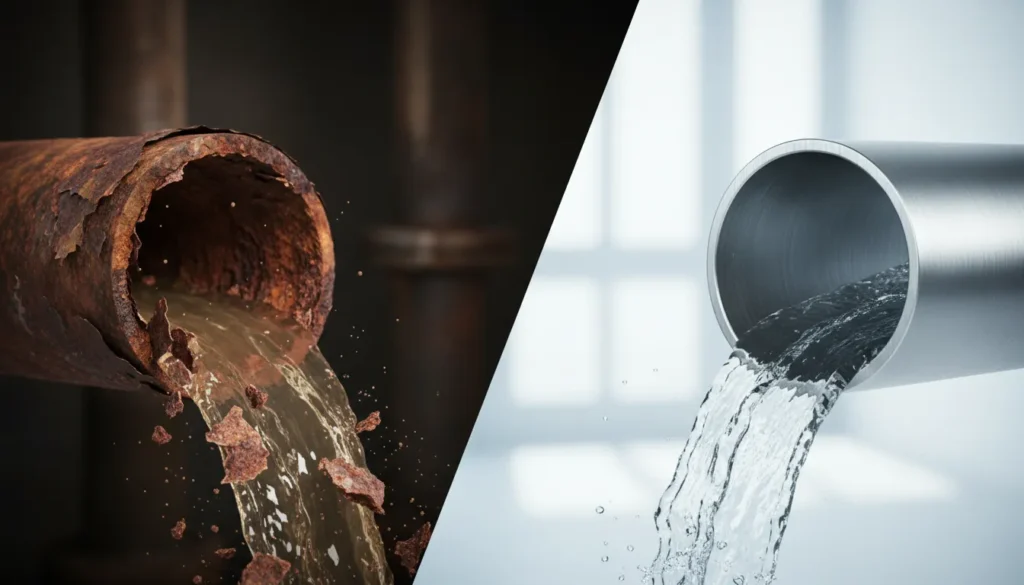
How Stainless Steel Water Pipes Protect Drinking Water
Stainless steel, especially grades such as 304 and 316L used in plumbing systems, offers a more stable material option for water delivery. Instead of relying only on filtration at the faucet, stainless steel water pipes help maintain water quality throughout the building’s internal distribution network.
- A Non-Reactive Barrier: High-quality stainless steel offers strong corrosion resistance in suitable water distribution environments and does not leach metals or chemicals. It acts as a passive barrier, preserving the water’s chemistry as it was delivered. This makes it the Stainless steel is also widely used in hygienic, food-contact and medical-related environments, which reinforces its reputation as a clean and stable material, underscoring its biological safety.
- Hygienic Surface & Long-Term Integrity: The smooth, hard surface of stainless steel pipe inhibits scale adhesion and biofilm formation. With proper installation techniques like our Threaded Press-Fit Adhesive System, which creates smooth, continuous internal joints, there are no crevices for bacteria to hide. This supports better water quality throughout the system’s life.
- Strength and Durability: It is incredibly strong and resistant to physical damage, water hammer, and extreme temperatures. This durability translates to a system lifespan that can match the building itself, eliminating the recurring cost, disruption, and waste of pipe replacements every 15-25 years.
- Sustainability from Start to Finish: At the end of its multi-decade service life, stainless steel is 100% recyclable with high scrap value, supporting a circular economy—unlike many composite or plastic materials that end up in landfills.
The Evidence: The safety of our specific systems is not merely theoretical. The anaerobic adhesive used in our threaded press-fit system is certified for potable water by international bodies. Furthermore, our stainless steel pipes and fittings have been tested and certified by the Sichuan Center for Disease Control for compliance with all national drinking water hygiene standards. You can review the evidence on our Quality Assurance & Test Reports page.
Making the Responsible Choice for New Builds & Retrofits
The choice of plumbing material is a long-term investment in health, operational cost, and property value.
- For New Construction: Specifying stainless steel piping from the outset is the most effective way to future-proof a building. It provides developers with a compelling quality differentiator and removes a major maintenance liability for decades. Our Project Portfolio, including major installations like the Guiyang Airport terminal, showcases its viability for large-scale projects.
- For Renovations & Concerns in Existing Buildings: If you are renovating a property or have concerns about old plumbing (discolored water, frequent leaks, low pressure), repiping with a modern stainless steel system is a definitive solution. Technologies like press-fit connections make retrofits faster and less invasive than ever.
Redefining the Standard for Water Safety
True water safety requires a complete view of the delivery system. Source treatment is essential, but the material inside the final distribution network also matters.
Stainless steel water pipes combine corrosion resistance, durability and hygiene, making them a strong choice for long-term building water systems.
Ready to specify a higher standard of water safety for your next project or property?
Explore our technical resources on Stainless Steel Pipes for Potable Water
Contact our engineering team to discuss how a stainless steel solution can meet your specific needs for health, performance, and longevity.