
Table of Contents
Press Tool Maintenance & Support
Keep Your Pipe Installation Tools Clean, Safe and Ready for Press-Fit Work
Press tool maintenance helps installers keep pipe installation tools clean, safe and ready for stainless steel piping work. This page provides practical care tips for Nonleak press tools, dies and installation accessories, including cleaning, lubrication, inspection and storage. Regular maintenance also helps reduce installation errors and extend tool service life.
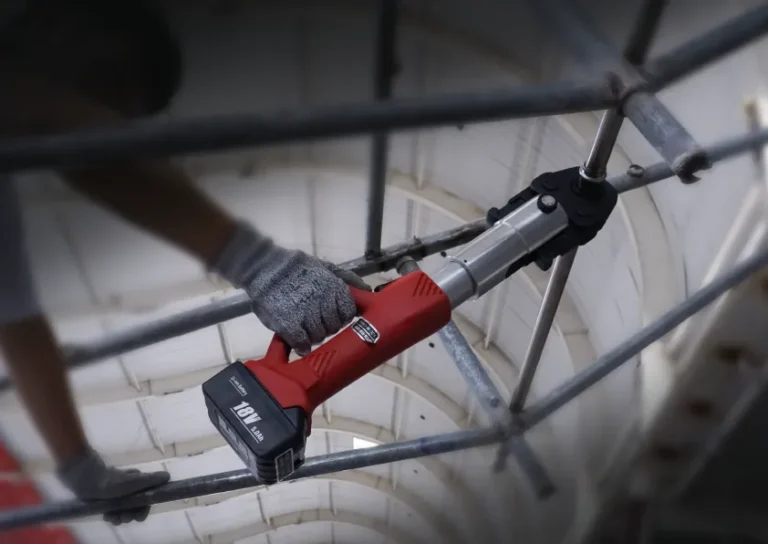
Tools & Accessories
Use the correct press tool system, die set and installation accessory for each pipe size and connection type before starting work.
Press Tool Systems for Stainless Steel Pipe Installation
Manual Hydraulic Press Tools (Patented)
Electric Press Tools
Electric Hydraulic Tools
Compatible Dies & Jaws
Cutting & Preparation Tools
Manual Tube Cutters
Deburring Tools
Measurement Instruments
Press Tool Maintenance Guidelines
Daily Maintenance
Daily press tool maintenance focuses on clean components, safe handling and stable pressing performance. Before each use, check whether the tool body, handles, valves, plunger assemblies and moving parts are clean and in normal condition.
Follow all safety precautions during operation.
Keep valves and plunger assemblies clean and free from dust, oil contamination and metal debris.
Handle tools gently and avoid impact, dropping or collision.
Ensure handles are fully tightened to prevent screw damage.
Hydraulic System Care
For hydraulic press tools, stable oil quality and clean connections are essential for safe pressure output and long-term tool reliability.
Hydraulic Fluid Specification: Use YB-N32 or higher-grade hydraulic fluid only.
Prohibited Fluids: Do not use alcohol, water, glycerol, brake fluid or ordinary engine oil.
Filtration Requirement: Use a 120–160 mesh filter for hydraulic fluid.
Connection Protection: Protect quick-connect ends from damage during disassembly.
Storage & Long-Term Care
Proper storage helps prevent corrosion, hose aging, jaw damage and hydraulic system failure when tools are not used for a long period.
Store tools in the original packaging or a protective case when not in use.
Keep tools in a dry, temperature-controlled environment.
Apply anti-rust oil to jaw surfaces before long-term storage.
Inspect hoses regularly for aging and replace them periodically.
Do not operate the tool without load, as this may damage the cylinder.
Service Intervals
Follow the recommended service intervals to keep press tool maintenance consistent and reduce unexpected downtime on installation sites.
Tool Main Unit: Factory inspection and maintenance every 6 months
Jaws/Dies: Factory calibration and inspection after 20,000 cycles
Common Tool Faults & Solutions
Use the troubleshooting table below to identify common pressure, oil delivery and hydraulic system issues. If the tool shows unstable pressure, abnormal oil delivery or repeated failure, stop using it and contact Nonleak technical support before continuing installation.
| Symptom | Possible Cause | Solution |
| Insufficient or No Pressure | Low pressure valve adjustment | Check system pressure with gauge. If below 63MPa, tighten pressure valve screw to specified value |
| Damaged/lost elasticity in high-pressure valve spring | Replace high-pressure valve spring | |
| Mild wear on high-pressure valve seat | Repair valve seat: lightly tap grade-1 steel ball 1-2 times or re-drill with drill bit | |
| Mild wear on unloading valve seat | Same as above | |
| Worn oil pump plunger hole | Replace plunger, repair plunger hole | |
| Sudden Drop in Oil Delivery & Pressure During Use | Permanent deformation or breakage of high-pressure valve spring | Replace high-pressure valve spring |
| Permanent deformation or breakage of low-pressure valve spring | Replace low-pressure valve spring | |
| Oil contamination compromising check valve sealing | Disassemble pump, clean with gasoline/diesel, reassemble with clean oil | |
| Reduced Oil Delivery, Insufficient Low Pressure | Damaged/lost elasticity in low-pressure valve spring | Replace low-pressure valve spring |
| Mild wear on low-pressure valve seat | Repair valve seat using same method as above |
For installation dimensions and connection requirements, visit our Technical Documentation page. To choose compatible products, review our Threaded Press-Fit Fittings and Double-Press Fittings pages. For general hand and power tool safety guidance, installers may also refer to OSHA hand and power tool safety resources.
Need Immediate Assistance with Your Tools?
For tool maintenance questions, replacement parts, calibration support or installation tool selection, our technical team can help you confirm the correct solution.