Choosing between press fittings and welding is an important decision in stainless steel piping projects. Both methods can create strong pipe connections, but they work in very different ways. The right choice depends on the project environment, installation schedule, safety requirements, pipe material and long-term maintenance expectations.
For many building water supply, HVAC, gas distribution and industrial piping systems, press fittings offer a faster and cleaner alternative to traditional welding. However, welding still has its place in some high-temperature, high-pressure or highly customized piping applications. Understanding the difference helps engineers, contractors and distributors choose the right connection method before installation begins.
What Are Press Fittings?
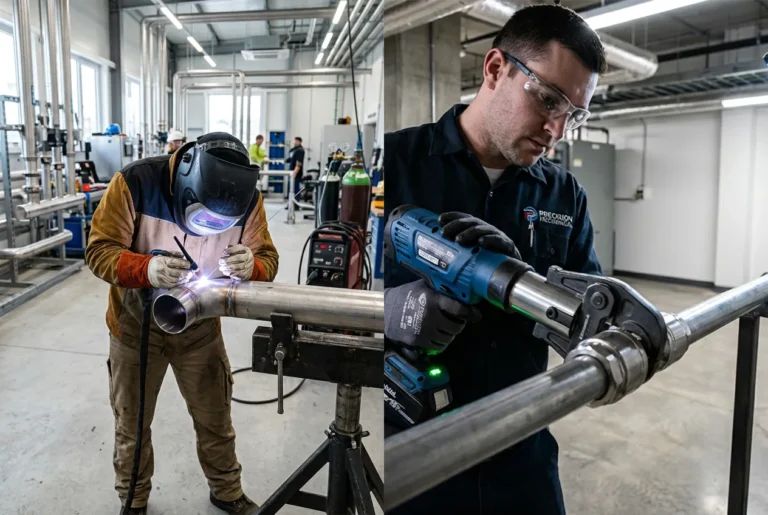
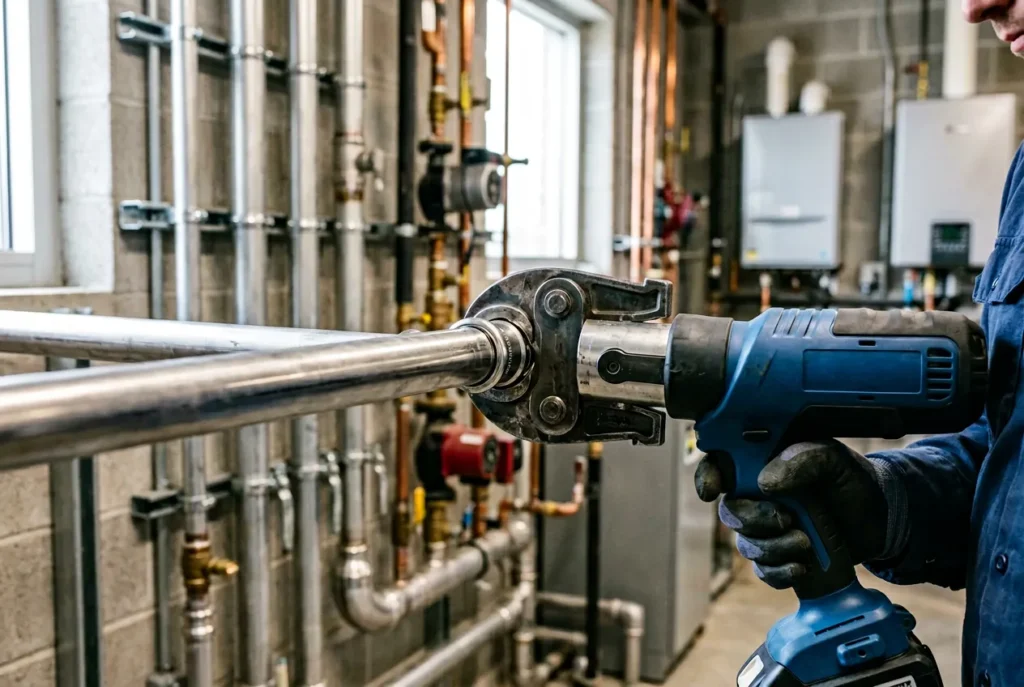
Press fittings are mechanical pipe fittings installed with a compatible press tool. During installation, the tool compresses the fitting around the pipe to create a secure connection. Depending on the product design, the fitting may use sealing elements, mechanical locking structures or other connection features to support leak resistance and long-term performance.
In stainless steel piping systems, press fittings are often used for water supply, HVAC, gas distribution, sanitary piping and commercial building installations. Because the connection process does not require open flames, the installation is cleaner and easier to standardize.
What Is Welding in Pipe Installation?
Welding joins pipe sections by using heat to fuse metal surfaces together. It can create very strong connections when performed by qualified welders under suitable conditions. For many industrial systems, welding remains an important pipe connection method.
However, welding usually requires more preparation, skilled labor, safety control and post-weld inspection. It may also involve heat discoloration, fumes, fire risk and additional surface treatment. In occupied buildings, commercial spaces or tight installation areas, these factors can increase project complexity.
Press Fittings vs Welding: Key Differences
The biggest difference between press fittings and welding is the installation process.
Press fittings use a cold connection method. Installers cut the pipe, insert it into the fitting and complete the connection with a press tool. As a result, the process can be faster and more repeatable.
Welding uses heat and requires more site control. The installer must prepare the joint, weld the pipe, inspect the weld and manage safety risks. Therefore, the process often takes longer and depends heavily on welder skill and site conditions.
Installation Speed and Project Efficiency
Press fittings can improve installation speed, especially in projects with many repeated connections. The process is straightforward and suitable for standardized pipe layouts. This can help construction teams reduce labor time and keep projects moving.
Welding may be slower because each joint requires more preparation and finishing. In addition, welding in tight spaces or live construction environments can create scheduling challenges. For commercial buildings and renovation projects, this difference can be significant.
Safety and Site Conditions
Press fittings do not require open flames during installation. This makes them useful in buildings where hot work is difficult, restricted or time-consuming to approve. It also helps reduce risks related to sparks, fumes and heat near finished surfaces or occupied areas.
Welding requires more safety control. The site may need fire protection, ventilation, permits and trained personnel. For some projects, these requirements are manageable. For others, they add cost and complexity.
Connection Quality and Consistency
Press fittings support repeatable installation when installers use the correct pipe size, fitting type and press tool. The process is easier to standardize across many joints. This can help improve consistency in large piping projects.
Welding quality depends strongly on welder skill, joint preparation, material condition and inspection. A good weld can perform very well, but inconsistent workmanship can create quality risks. Therefore, welding projects often require stronger supervision and testing procedures.
Long-Term Maintenance Considerations
A well-designed press fitting system can support stable long-term operation when installed correctly. It can also simplify future maintenance because the installation process is clean and organized.
Welded systems can also offer long service life. However, repairs or modifications may require cutting, welding and additional site control. In buildings where downtime matters, this can be less convenient.
When Should You Choose Press Fittings?
Press fittings are often a strong choice for:
- Building water supply systems
- HVAC piping and mechanical rooms
- Commercial buildings and public facilities
- Renovation projects where hot work is difficult
- Prefabricated pipe modules
- Projects with many repeated pipe connections
- Installations that require clean and fast work on site
For stainless steel piping projects, press fittings help combine installation efficiency with clean media delivery and corrosion resistance.
When Is Welding Still Useful?
Welding may still be suitable for projects that require special fabrication, high-temperature service, heavy industrial pipework or specific engineering standards. It can also be necessary where the project design requires welded joints.
The key point is not that one method is always better. Instead, project teams should match the connection method with the application, site conditions, inspection requirements and lifecycle expectations.
Nonleak Press-Fit Solutions for Stainless Steel Piping
Nonleak provides stainless steel press-fit products for building water supply, gas distribution, HVAC and industrial piping systems. Our product range includes threaded press-fit fittings, double-press fittings, orbital press fittings and related stainless steel pipes.
For projects that require fast installation, clean connections and long-term reliability, press fittings can be a practical alternative to welding. To select the right system, review the pipe size, medium type, connection method, installation environment and project standards before specification.
Explore Nonleak press-fit fittings or contact our team for product selection support.