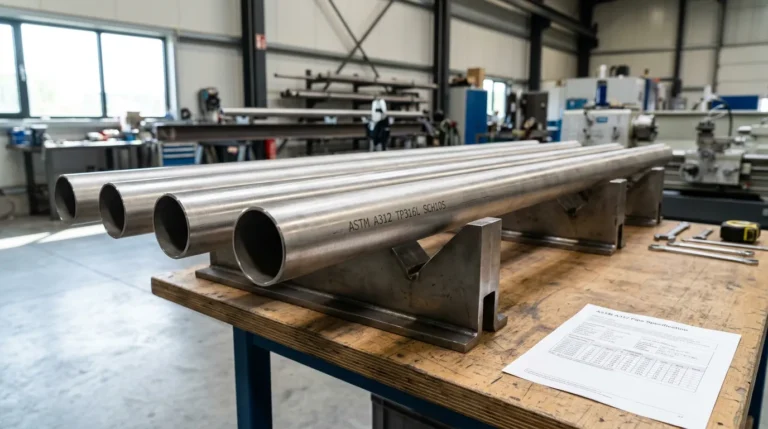
ASTM A312 is one of the most frequently specified standards for austenitic stainless steel pipe in industrial, commercial and utility piping projects. A purchase description such as “ASTM A312 TP316L, NPS 2, Schedule 10S” may look simple, but it combines decisions about the material grade, manufacturing route, outside diameter, wall thickness, testing and documentation.
This guide explains what ASTM A312 stainless steel pipe covers, how it works with related ASME standards, which grades are commonly requested and what buyers should confirm before sending an RFQ. The controlled project specification and the edition named in the purchase order always take precedence over this general guide.
Quick answer: ASTM A312 defines how covered austenitic stainless steel pipe is manufactured, heat treated, tested, dimensionally controlled, marked and certified. It does not select the grade, schedule, design pressure or service conditions for the buyer; those decisions must come from the purchase specification and governing piping code.
What Does ASTM A312 Cover?
ASTM A312/A312M is a material and product specification for seamless, straight-seam welded and heavily cold-worked austenitic stainless steel pipe. It is commonly referenced for high-temperature service and general corrosive service, although suitability for a specific fluid, pressure, temperature and environment still requires engineering review.
The specification addresses important manufacturing and acceptance requirements, including:
- permitted manufacturing routes;
- stainless steel grade and chemical composition;
- heat treatment requirements;
- mechanical properties and product tests;
- outside-diameter and wall-thickness tolerances;
- hydrostatic or nondestructive electric examination, as applicable;
- workmanship, finish, marking and certification.
It does not, by itself, complete the piping design. The purchaser must still identify the required size, wall thickness, grade, end preparation, length, inspection level and project code.
How ASTM A312 Works with Related Pipe Standards
A practical pipe specification normally uses several documents together. ASTM A312 defines the pipe product requirements, while other standards or codes may govern dimensions, system design, fittings and weld-end preparation.
| Document | Primary responsibility | What the buyer should confirm |
|---|---|---|
| ASTM A312/A312M | Stainless steel pipe material, manufacture, heat treatment, tests, tolerances and marking | Edition, grade, manufacturing route and supplementary requirements |
| ASME B36.19M | Stainless steel pipe outside diameters and schedule wall thicknesses | NPS, schedule designation and dimensional series |
| ASME B31.3 or another project piping code | System design, allowable conditions, fabrication, examination and testing | Which code and edition govern the project |
| ASTM A403/A403M | Wrought austenitic stainless steel pipe fittings | Fitting grade and class |
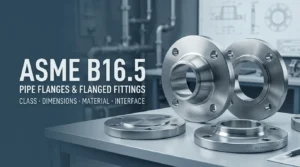
| ASME B16.9 | Factory-made butt-weld fitting dimensions and tolerances | Fitting type, size and dimensional standard |
| ASME B16.25 | Butt-welding end preparation | Bevel details and any project-specific end requirements |
For the controlled wording and current edition, buyers should consult the ASTM standards catalog and the ASME Codes & Standards catalog.
Important: ASTM A312 is a pipe product specification, not a stand-alone pressure-rating table. Allowable system pressure depends on the selected dimensions, material properties at design temperature, joint design, corrosion allowance and the applicable piping code.
Seamless, Welded and Heavily Cold-Worked Pipe
ASTM A312 allows more than one manufacturing route. The correct choice depends on the project specification, available size range, pressure-temperature design, inspection requirements, delivery schedule and commercial considerations.
| Manufacturing route | General description | RFQ points to verify |
|---|---|---|
| Seamless | Produced without a longitudinal weld seam | Available grade, size, wall thickness, length and required examinations |
| Welded | Formed from strip or plate and joined by a longitudinal weld | Weld process, heat treatment, weld examination and dimensional tolerance |
| Heavily cold-worked | Welded pipe subjected to substantial cold reduction before final heat treatment | Whether the project explicitly permits or requires this route |
“Seamless” should not be treated as an automatic synonym for “better,” and “welded” should not be treated as an automatic downgrade. Compliance depends on the complete specification, manufacturing controls, testing, traceability and suitability for the intended service.
For a broader side-by-side procurement comparison, see our seamless vs welded pipe guide, including manufacturing route, inspection, availability and RFQ selection factors.
Common ASTM A312 Stainless Steel Grades
The standard includes multiple austenitic stainless steel grades. The most common commercial inquiries involve TP304, TP304L, TP316 and TP316L, but the final grade must match the fluid chemistry, temperature, fabrication method, cleaning regime and project code.
| Common grade | Typical selection reason | Important limitation |
|---|---|---|
| TP304 | General-purpose austenitic stainless steel for many water and industrial services | May not be the preferred choice in chloride-rich or highly aggressive environments |
| TP304L | Lower-carbon version often selected where welding and resistance to sensitization are important | Grade selection still requires review of temperature and design-code requirements |
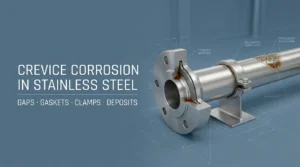
| TP316 | Molybdenum-bearing grade with improved resistance in many chloride-containing environments | It is not immune to pitting, crevice corrosion or stress-corrosion cracking |
| TP316L | Lower-carbon 316 grade commonly requested for welded piping and corrosive service | Water chemistry, temperature, surface condition and maintenance remain critical |
| H grades | Higher-carbon variants used in certain elevated-temperature applications | Use only when the governing code and service conditions support the selection |
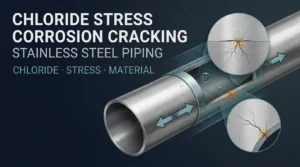
A grade designation alone does not establish immunity to every corrosion mechanism. In chloride-containing service, material selection should also consider tensile stress, temperature and exposure conditions associated with chloride stress corrosion cracking.
For a direct material comparison, see our guide to 304 vs 316 stainless steel pipe.
Pipe Size, Schedule and Wall Thickness
ASTM A312 pipe should be ordered with a complete dimensional description. “Two-inch stainless steel pipe” is not enough because pipes with the same nominal size can have different wall thicknesses.
A clear dimensional description normally includes:
- nominal pipe size, such as NPS 2;
- schedule, such as Schedule 10S or Schedule 40S, or a specified nominal wall thickness;
- required length and length tolerance;
- plain, beveled, threaded or other end condition;
- any project-specific outside-diameter or ovality controls.
ASME B36.19M is commonly used for stainless steel pipe dimensions. The “S” suffix is important in many specifications because Schedule 40S is not always identical to Schedule 40 across every nominal size. Review our stainless steel pipe dimensions guide for NPS, DN, OD and schedule terminology. Detailed wall-thickness references are also available in the Schedule 10 stainless steel pipe guide and the Schedule 40 stainless steel pipe guide.
For a single NPS-based comparison of common wall-thickness series, see the pipe schedule chart. Use the chart for dimensional reference, while ASTM A312/A312M continues to define the separate pipe product and material requirements.
Testing, Inspection and Traceability
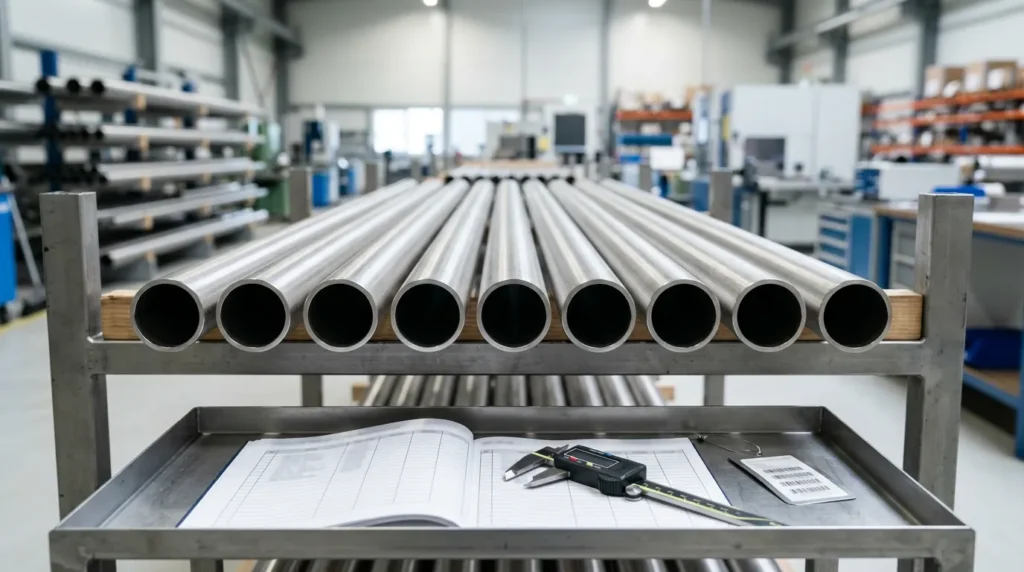
Compliance is more than matching a grade name on a quotation. ASTM A312 contains requirements for chemical composition, mechanical properties, heat treatment, dimensional tolerances, workmanship and product examination. Depending on the manufacturing route, size and purchase order, acceptance may involve tensile testing, flattening or other product tests, dimensional checks and hydrostatic or nondestructive electric examination.
Buyers should distinguish between standard requirements and additional project requirements. The following items are often requested commercially but may not be automatic in every order:
- positive material identification (PMI);
- intergranular-corrosion testing;
- additional ultrasonic or eddy-current examination;
- radiographic examination of welds;
- third-party inspection;
- special surface finish, pickling or passivation;
- project-specific packing and end protection;
- additional heat-number or piece-level traceability.
The RFQ should state these requirements before production. Adding them after the pipe has been manufactured can affect feasibility, cost and delivery time.
What to Check on the Marking and Material Certificate
Marking and documentation should allow the delivered pipe to be matched to the purchase order and manufacturing records. The exact marking format depends on the specification, size and order requirements, but buyers commonly verify:
- manufacturer identification;
- ASTM A312/A312M designation;
- material grade, such as TP304L or TP316L;
- nominal size and schedule or wall thickness;
- manufacturing method where required;
- heat number or traceability reference;
- length, quantity and purchase-order reference;
- test results and compliance statement on the material test report.
Nonleak’s quality control page explains the broader inspection and traceability approach used to support project supply.
ASTM A312 vs ASTM A269 vs ASTM A358
These specifications can all appear in stainless steel procurement, but they are not interchangeable labels.
| Specification | Typical product focus | Common buyer question |
|---|---|---|
| ASTM A312/A312M | Seamless, welded and heavily cold-worked austenitic stainless steel pipe | Which grade, schedule and manufacturing route are required? |
| ASTM A269/A269M | Seamless and welded austenitic stainless steel tubing for general service | Is the project specifying tube OD and wall rather than NPS pipe? |
| ASTM A358/A358M | Electric-fusion-welded austenitic chromium-nickel stainless steel pipe | Does the project require a particular class, weld treatment or examination level? |
Do not substitute one specification for another solely because the grade appears similar. Pipe versus tube dimensions, manufacturing route, examination and code acceptance may differ.
Common Applications and Selection Limits
ASTM A312 stainless steel pipe is frequently considered for process piping, industrial utilities, water systems, chemical service, high-temperature lines and other applications where austenitic stainless steel is appropriate. However, specification compliance does not automatically prove that a pipe is suitable for every service.
Engineering selection should also consider:
- design pressure and temperature;
- chloride concentration and water chemistry;
- external exposure, insulation and support conditions;
- welding, heat input and post-fabrication cleaning;
- flow velocity and risk of erosion-corrosion;
- sanitary finish or hygienic-design requirements;
- potable-water, gas or local regulatory approvals;
- compatibility with fittings, valves, gaskets and joining methods.
ASTM A312 defines pipe product requirements; it does not replace the welding procedure used to join the piping system. For projects using field or shop butt welding, review the applicable WPS for butt weld pipe together with its qualification basis, production wall thickness and project inspection requirements.
For available pipe options and project support, visit the stainless steel pipes category or review our technical documentation.
ASTM A312 Pipe RFQ Checklist
A complete RFQ reduces clarification cycles and helps suppliers quote comparable products. Include the following information:
- Standard and edition: ASTM A312/A312M and the project-required edition.
- Grade: for example, TP304L or TP316L.
- Manufacturing route: seamless, welded or heavily cold-worked, if restricted.
- Size: NPS or specified outside diameter.
- Wall: schedule designation or nominal wall thickness.
- Ends: plain, beveled, threaded or project-specific preparation.
- Length: random, fixed or cut length, including tolerance.
- Quantity: total length, number of pieces or weight.
- Testing: standard examination plus any PMI, corrosion, NDE or third-party requirements.
- Documentation: material test report, inspection certificate and traceability needs.
- Surface and packing: finish, pickling/passivation, end caps, bundling and export protection.
- Project code: the applicable piping code, approval or client specification.
A concise order description might read:
ASTM A312/A312M TP316L welded stainless steel pipe, NPS 2, Schedule 10S, plain ends, fixed 6 m lengths, material test report required, with project-specified inspection and packing.
The example is illustrative only. The actual purchase description should be reviewed against the project specification and governing code.
Frequently Asked Questions
Is ASTM A312 a material grade?
No. ASTM A312 is a product specification. The grade is stated separately, such as TP304L or TP316L.
Can ASTM A312 pipe be seamless or welded?
Yes. The specification covers seamless, straight-seam welded and heavily cold-worked austenitic stainless steel pipe. The purchase order should state any restriction on the manufacturing route.
Does ASTM A312 define Schedule 10S and Schedule 40S dimensions?
ASTM A312 includes product tolerances and requirements, while stainless steel pipe schedule dimensions are commonly selected using ASME B36.19M and the project documents. Always state the NPS and schedule or nominal wall thickness in the RFQ.
What is the difference between ASTM A312 and ASME SA-312?
ASME SA-312 is the ASME material specification adopted from ASTM A312 for use in the ASME Boiler and Pressure Vessel Code. The adopted editions may not align at every point in time, so the purchase order should state the required designation and edition rather than assuming the two references are automatically interchangeable.
Does TP316L mean the pipe cannot corrode?
No. TP316L improves resistance in many environments, but it can still suffer pitting, crevice corrosion, stress-corrosion cracking or other damage under unfavorable chemical, temperature or design conditions.
Is ASTM A312 pipe automatically suitable for potable water?
No. Material compliance and potable-water approval are separate questions. Local regulations, product certifications, water chemistry, joining components and system hygiene must also be checked.
Does ASTM A312 provide a maximum pressure rating?
No. A pressure rating cannot be determined from “ASTM A312” alone. The calculation also requires pipe size and wall thickness, material strength at design temperature, joint efficiency or joining method, corrosion allowance and the governing design code.
What documents should be requested with the pipe?
At minimum, request the documentation required by the purchase order, such as a material test report showing grade, heat traceability, chemical and mechanical results, plus any project-specific inspection records.
Discuss Your Stainless Steel Pipe Requirements
Nonleak supplies stainless steel pipes and related piping components for commercial and industrial projects. Send the required standard, grade, size, schedule, quantity, service conditions and inspection requirements through our contact page. Our team can help review the RFQ and identify the information needed before quotation.
Technical note: This article is a general purchasing guide and does not reproduce or replace the controlled text of ASTM, ASME or the project specification.